| About me | |
|---|---|
| Hi! My name is Elsa Danielsson and I’m a PhD student at Chalmers University of Technology. I am part of Janine Splettstößer’s group and work on quantum thermodynamics and transport. In particular, I’m interested in nonthermal resources—collections of electrons that cannot be described by temperature—for energy conversion, like quantum engines and refrigerators. |  |
Recent
Can a thermoelectric device adapt to its environment?
August 31, 2026
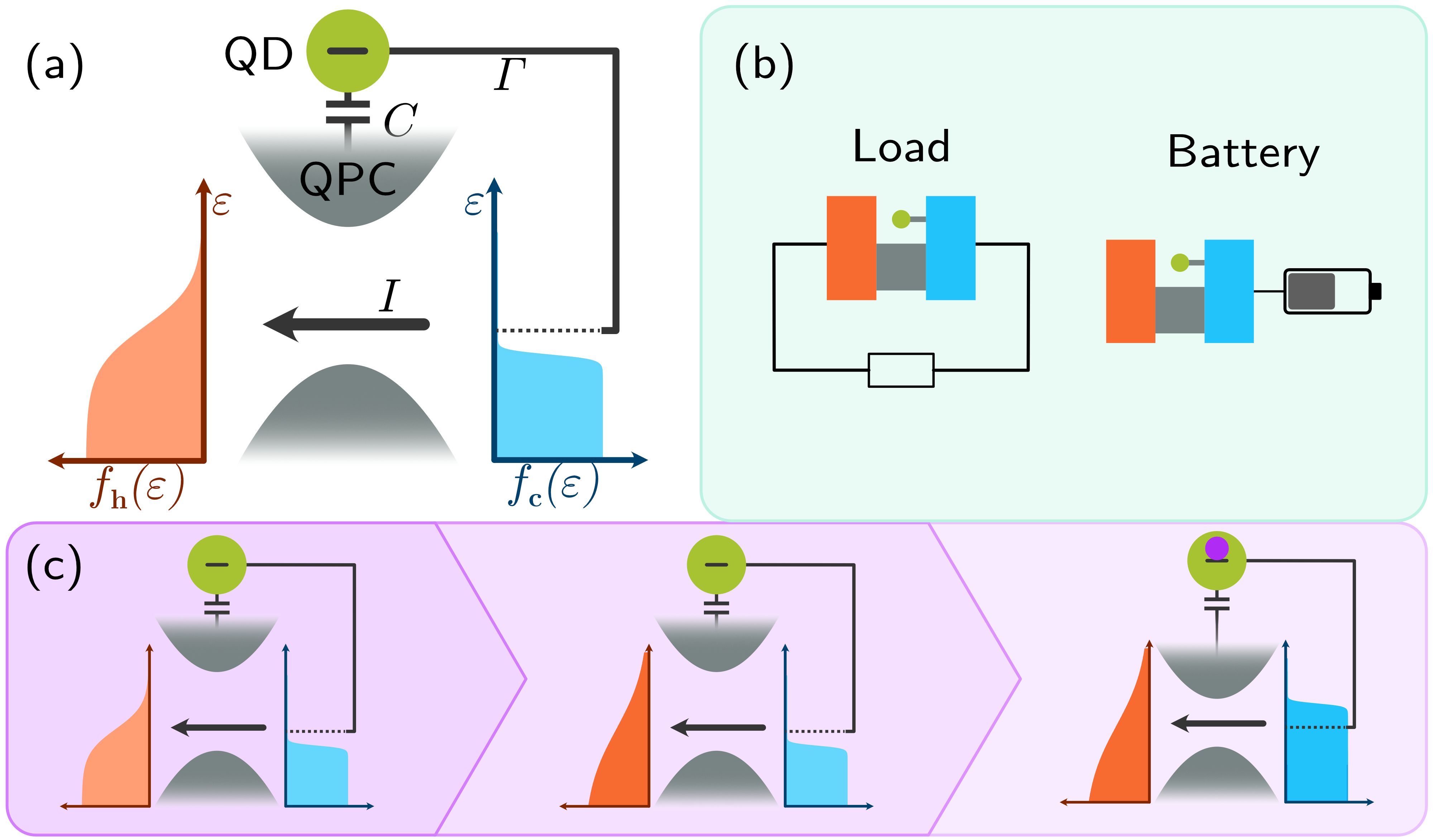
Our work on an autonomous feedback protocol for energy conversion has been released on arXiv. Here we ask the question: is it possible for a thermoelectric machine to adapt to its environment? Steady-state energy converters are powerful devices on the nanoscale, enabling high efficiency for producing power while avoiding moving parts that are difficult to control. However, they are static, meaning they cannot adapt to if the temperature is unknown or changes—a typical situation in nanoscale implementations. By introducing an autonomous feedback protocol in a thermoelectric device, we show that it is possible to have adaptable energy conversion, and that it makes for a more effective device.
Read more here: An autonomous feedback protocol: responding to temperature and potential changes in energy converters
Chasing the Researcher’s Grand Prix
April 18, 2026
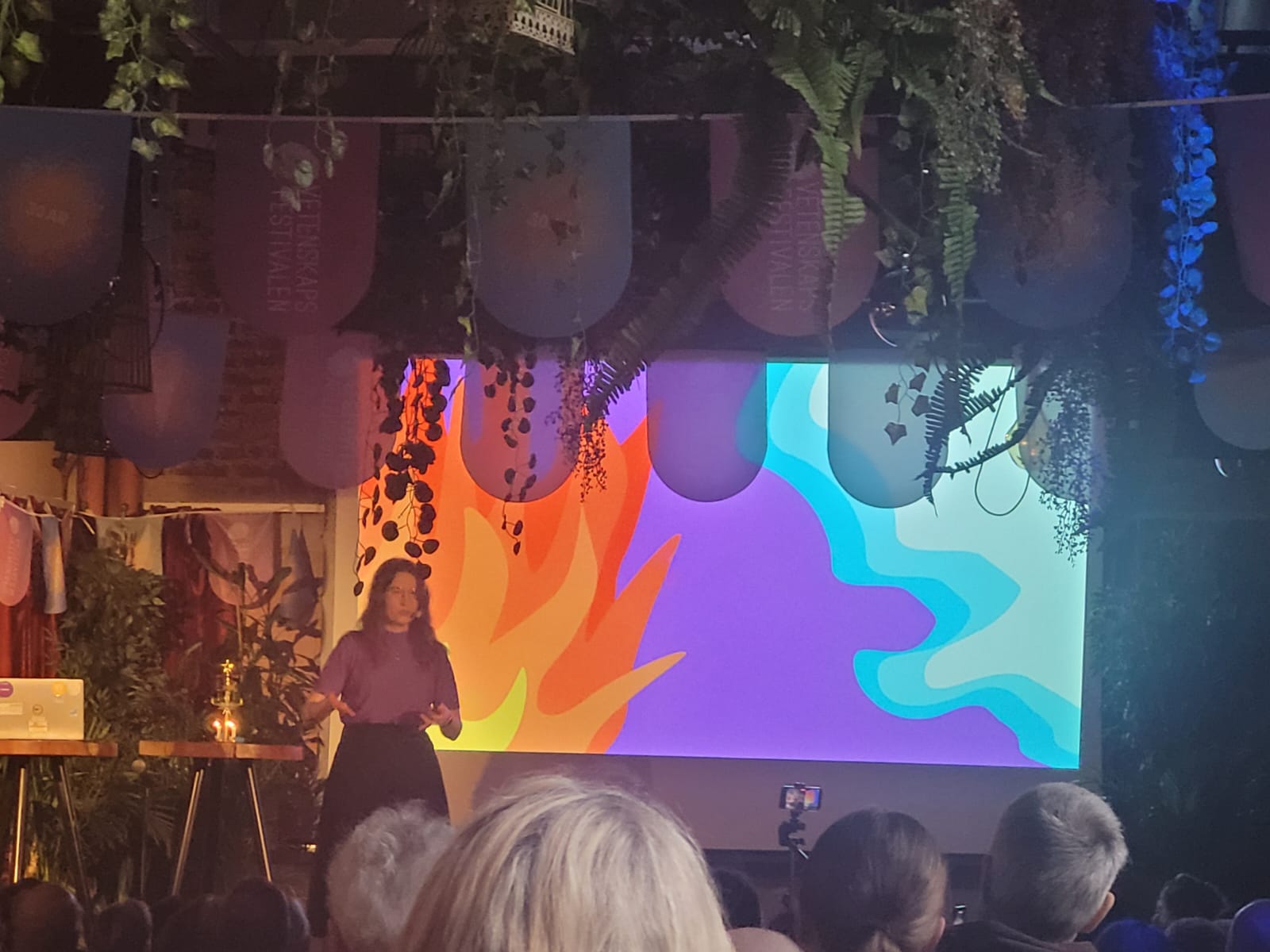
On a beautiful spring evening at a bar in central Gothenburg, I got to present my research as a part of the Researchers’ Grand Prix - a competition in presenting research to the public. In even better news: I won! Next stop: the finale in Stockholm in November. Competing was a great experience, and I learned a lot about presenting research both factually and inspiringly.
Harnessing unconventional resources
November 28, 2025
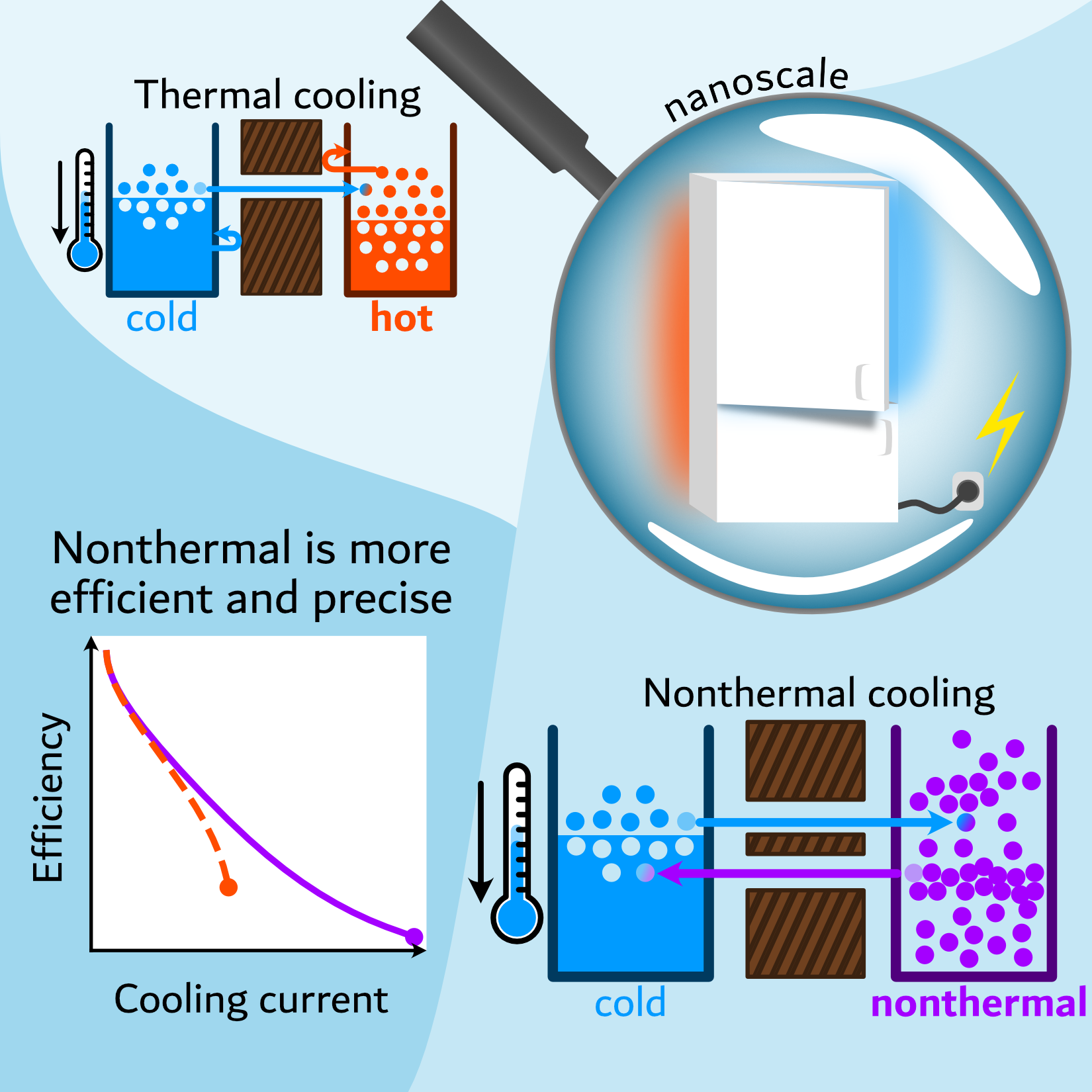
Together with Janine Splettstößer and Henning Kirchberg, I published a paper on designing nanoelectronic devices for energy conversion. We present a general theoretical method for finding the best transmission properties given a certain task, like maximizing an output current or an efficiency. The method is valid for any type of current–like electric, energy, and even entropy–and yields a remarkably simple result: the optimal transmission probability is a series of boxcars in the energy spectrum regardless of the type of current or electron distribution. With the method, we also demonstrate that nonthermal resources can give a much higher performance than thermal counterparts.
Highlighted as Editors’ Suggestion
Read more here: Optimizing energy conversion with nonthermal resources in steady-state quantum devices